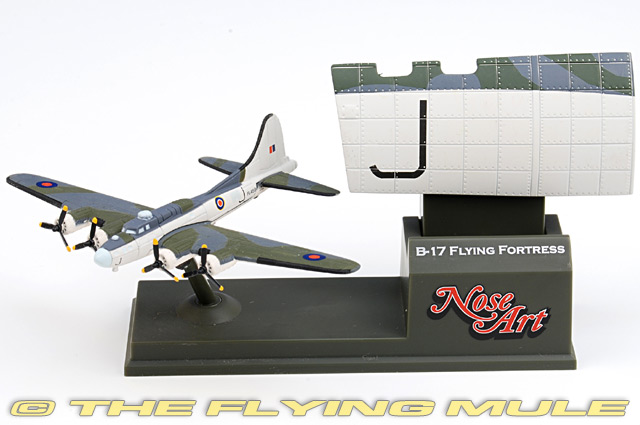
Corgi Showcase Noseart Series CS90465
Boeing B-17 Flying Fortress Diecast Model
RAF Coastal Command No.220 Sqn , RAF Ballykelly, Northern Ireland, 1942 |
| 1:300 Scale | | Length | | Width |
|---|
| Boeing B-17 Flying Fortress | | 3" | | 4.25" |
On the outbreak of World War II No. 220 Squadron began patrols from Thornaby and by November 1939 had converted from Ansons to Hudsons. It used these for anti-shipping missions off Norway and the Dutch Coast from May 1940. In April 1941 the Squadron moved to northern Scotland for attacks on coastal shipping and harbours in Norway and in November supplied a detachment to operate the surviving Fortresses of No. 90 Squadron in the Middle East for two months. The home-based element of the squadron began conversion to Fortresses in January 1942 and became operational on 29th April from Ballykelly, Northern Ireland, where this particular aircraft was based. FL459 had arrived in the UK on 23rd July 1942 and was delivered to 220 Squadron at Ballykelly on 20th August 1942. It carried the individual code J and during its wartime career sank a total of 4 U-boats before moving to meteorological duties from March 1945.
Designed to meet a US Army Air Corps requirement for a multi-engined bomber to replace the B-10, the B-17 first flew on July 18, 1935. Best known for its role in the US Army Air Forces' daylight strategic bombing campaign during World War II, the B-17 could fly high and had a long range, and was capable of defending itself from enemy fighters. It was also tough, withstanding extensive battle damage, and was capable of carrying a 6,000 lb bombload. The B-17 became one of the symbols of Allied air power, equipping 32 overseas combat groups and dropping a total of 580,631 metric tons of bombs on European targets. © Copyright 2003-2026 The Flying Mule, Inc.
The Corgi "Showcase Collection Noseart Series" range presents affordable, ready-made diecast models of military aircraft paired with a scale reproduction noseart panel.
During WW2, young airmen separated from home, family, loved ones and a familiar way of life often sought ways of escaping the harsh reality of war by personalising their aircraft with what has become known as nose art. Humour, slogans, nicknames, cartoons, girls; all were used to bring a touch of light relief to their deadly day-to-day existence. The Corgi Showcase range aims to capture some of the superb works of art that adorned aircraft on all sides of the conflict. Each model is displayed alongside a diecast body panel featuring the art in colourful, large-scale detail.
Corgi "Showcase Collection Noseart Series" diecast airplanes feature:
- Diecast metal construction with some plastic components.
- Diecast metal larger scale noseart panel.
- Realistic panel lines and surface details.
- Pad printed markings that won't fade or peel like decals.
- Poseable stand to display the aircraft "in flight".
- Moving parts such as propellers, rotors and swing-wings where applicable.
- Descriptive, collectible data card.
© Copyright 2003-2026 The Flying Mule, Inc.